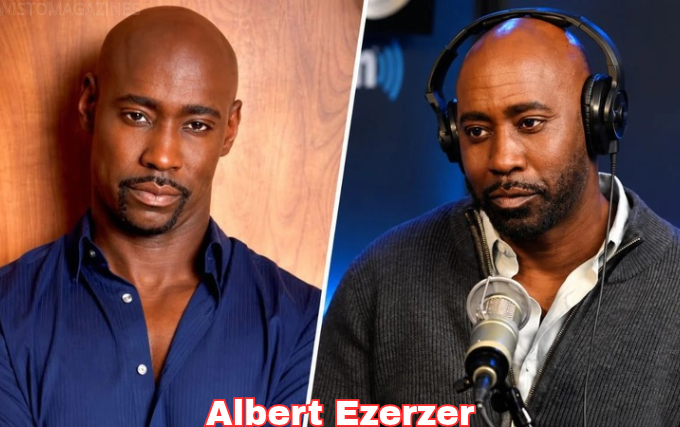

Although most viewers would never see Albert Ezerzer’s name in the opening credits, his influence may be seen in some of the most polished films to come out of Hollywood in the early 2000s. He wasn’t a director who demanded creative autonomy, nor was he a leading guy. Rather, Ezerzer was a member of the transportation department, a crucial group of film professionals whose job takes place both before and after the cameras roll. In order to comprehend his existence, one must look past the limelight and into the actual and metaphorical logistical machinery that keeps a production running.
Ezerzer, who was born on January 31, 1959, spent about 20 years working in the film and television industries in the United States. Although his name can be found in the credits of significant films and television shows, his contribution was quantified in terms of performers performing safely, schedules being fulfilled, and turmoil being subtly avoided. The brief but thoughtful homage that was shown on screen upon his death on May 9, 2014, at the age of 55, was a hint that those who really understood the production realized what had been lost.
The Formative Years and Entry into the Industry
For someone who worked behind the scenes rather than in front of the public, it is not unexpected that there are little details concerning Albert Ezerzer’s early life in the public record. What is known is that he was born in the United States in the late 1950s, when a new, more dispersed production landscape was emerging and the studio structure was collapsing. Workers who could swiftly adapt, solve difficulties on the spot, and recognize that a movie set is a little city with its own traffic laws and crises were praised in that setting.
Ezerzer found himself at the nexus of diplomacy and logistics when he entered the transportation sector of production. On a particular day, drivers and transportation captains are frequently the first crew members to engage with talent and the last to depart after wrapping. They manage the demands of performers, producers, and union rules while navigating studio lots, city streets, and isolated locales. It was a perfect fit for someone with a cool head and an innate sense of order. By the late 1990s and early 2000s, Ezerzer had made a name for himself as a dependable figure in that field, earning the kind of reputation that encourages recurrent engagements for various productions.
Building a Career Behind the Wheel and Behind the Scenes
The transportation department is rarely discussed in film criticism, yet its members are indispensable to the finished product. Ezerzer’s credits reflect a steady ascent through the ranks of Hollywood’s below-the-line workforce. He worked on the 2001 film Tart, a drama starring Dominique Swain, and the 2002 road-trip comedy Interstate 60: Episodes of the Road, directed by Bob Gale . These projects required moving cast and equipment across multiple locations, a task that demands more than a valid driver’s license—it requires the ability to read a shooting schedule like a chessboard and anticipate problems before they become delays.
His later work on television, particularly the 2006 miniseries Covert One: The Hades Factor, demonstrated his ability to handle the compressed timelines of episodic production . Television moves faster than film, with fewer margins for error and tighter budgets. A transportation crew member who can keep pace with that rhythm becomes valuable, and Ezerzer clearly did. His career was not built on flashy credits or public recognition, but on the quiet accumulation of trust from producers, directors, and fellow crew members who knew that when Ezerzer was on the job, the logistics would hold.
The Suits Connection and the Tribute That Sparked Curiosity
For many viewers, Albert Ezerzer’s name became known only after his death. When the fourth season of the legal drama Suits premiered on June 11, 2014, the episode ended with a full-screen title card reading “In Memory of Albert Ezerzer” . For most of the audience, the name was a mystery—a question mark in the credits of a show they loved. Ezerzer had worked in the transportation department on Suits during its earlier seasons, managing the logistics of moving cast and crew through the demanding schedule of a cable drama .
The tribute itself was a testament to the kind of colleague Ezerzer was. Production companies do not routinely dedicate episodes to crew members unless the loss is deeply felt and widely acknowledged by the cast and crew. Ezerzer’s death was sudden, the result of a ruptured aortic aneurysm, and it struck the Suits community hard . The on-screen dedication was both a mark of respect and a quiet acknowledgment that the show’s polished surface depended on people like him—people whose names never appear in trailers but whose absence is felt every day on set.
Navigating Misconceptions and Public Confusion
The public’s brief encounter with Ezerzer’s name through the Suits tribute led to a persistent confusion that has lingered for years. Some viewers, seeing the tribute, wondered whether Ezerzer was an actor who had appeared on the show or whether he was somehow connected to the cast in a more visible way. A rumor even circulated suggesting that Ezerzer and actor D.B. Woodside, who played Jeff Malone on Suits, was the same person or that Ezerzer had served as Woodside’s stand-in . The resemblance between the two men, combined with the behind-the-scenes nature of Ezerzer’s role, fueled speculation that was never substantiated by official sources.
In reality, Ezerzer was a transportation crew member, not a performer . His work was logistical, not theatrical. The confusion speaks to a broader truth about the entertainment industry: the people who make the machinery run are often invisible until something goes wrong or until they are gone. Ezerzer’s legacy, in this sense, is instructive. It reminds us that a television show is not just the product of writers and actors but of a vast network of technicians, drivers, coordinators, and support staff whose contributions are structural rather than performative.
The Personal Legacy and the Measure of a Life
Beyond the credits and the on-screen tribute, Albert Ezerzer’s life was defined by the relationships he built and the family he left behind. He was married to Rachel Ezerzer, and while public records about their life together are limited, the fact of his marriage is a reminder that behind every crew member is a person with a life that extends far beyond the call sheet . His death at fifty-five was premature, a sudden rupture that took him from his family and colleagues without warning. The memorial page established in his memory offers a quiet space for those who knew him to mark his passing, separate from the industry recognition that briefly brought his name to public attention .
The lasting impact of Albert Ezerzer is not measured in awards or box office receipts. It is measured in the films and shows that reached audiences because the transportation logistics worked, in the actors who arrived on time and safely, and in the colleagues who remembered him when the cameras stopped rolling. His story is a necessary counterpoint to the celebrity-driven narratives that dominate discussions of Hollywood. It is a reminder that a life in film can be meaningful without being famous, and that the people who drive the trucks and coordinate the vans are as essential to the art form as the people who stand in the light.
Conclusion
Albert Ezerzer’s biography is not one of dramatic breakthroughs or public triumphs. It is the story of a working professional who found his place in the ecosystem of production and performed his role with enough competence and warmth that his absence was marked on national television. His credits—Tart, Interstate 60, Covert One, Suits—are a map of a career spent in service of the final product . He was a transportation crew member, a husband, a colleague, and a quiet fixture on sets where precision mattered. When he died in May 2014, the tribute that flashed across the screen was brief, but it was enough to prompt strangers to ask who he was. The answer, as this exploration shows, is someone whose work made the finished product possible—and whose memory deserves more than a passing glance.
FAQ: Albert Ezerzer
Who was Albert Ezerzer?
Albert Ezerzer was an American film and television crew member who worked in the transportation department on various Hollywood productions. He was born on January 31, 1959, and passed away on May 9, 2014. His credits include Interstate 60: Episodes of the Road (2002), Covert One: The Hades Factor (2006), and Tart (2001). He is best known to the general public for the on-screen tribute that appeared in the Suits Season 4 premiere, which honored his contributions to the show’s production team.
What did Albert Ezerzer do on Suits?
Ezerzer worked in the transportation department on Suits, managing logistics for the cast and crew during the show’s earlier seasons. He was not an actor and did not appear on screen. Aaron Korsh, the creator and executive producer of Suits, confirmed on social media that Ezerzer “worked in our transpo” department after viewers inquired about the tribute card that closed the Season 4 premiere on June 11, 2014. The full-screen message read “In Memory of Albert Ezerzer” before the credits rolled.
Why was there a tribute to Albert Ezerzer on Suits?
The tribute was a mark of respect from the production team following Ezerzer’s death on May 9, 2014. The Suits Season 4 premiere, which aired on June 11, 2014, ended with a dedication card reading “In Memory of Albert Ezerzer”. Production companies do not routinely dedicate episodes to crew members unless the loss is deeply felt by the cast and crew. The tribute served as a quiet acknowledgment that the show’s polished production depended on behind-the-scenes professionals like Ezerzer.
How did Albert Ezerzer die?
Ezerzer passed away on May 9, 2014, at the age of 55. Reports indicate that his death was caused by complications from a ruptured aortic aneurysm. His passing was sudden and unexpected, which contributed to the shock felt by the Suits production community and prompted the on-screen dedication that aired roughly a month later.
Was Albert Ezerzer related to D.B. Woodside or the same person?
No. Albert Ezerzer and actor D.B. Woodside are two entirely different individuals. A rumor circulated suggesting they were the same person or that Ezerzer served as Woodside’s stand-in, but this is false. Woodside is an actor who played Jeff Malone on Suits, while Ezerzer was a transportation department crew member who never appeared on screen. The confusion likely arose from the timing of the tribute and the fact that both names became associated with the same show, but there is no connection between them beyond working on the same production.
Was Albert Ezerzer married?
Public records indicate that Albert Ezerzer was married to Rachel Ezerzer. Beyond this basic fact, details about their personal life together are limited in publicly available sources. The existence of his marriage is a reminder that behind every crew member is a private life that extends far beyond the call sheet and the credits. No information about children or other family members has been confirmed in accessible public records.